Chinese Food Guide for Foreigners 2026: What to Eat & Order
Chinese food guide for first-time visitors: must-try dishes, regional food, ordering without Chinese, street food safety, allergies, and tipping rules.
What You Need to Know About Eating in China
Here's the thing about Chinese food in China: it's nothing like your local takeout.
That sweet, gloopy General Tso's chicken you've been eating? It doesn't exist here. Neither does fortune cookie (that's an American invention). What you'll find instead is a cuisine that's diverse, regional, occasionally confronting, and absolutely delicious once you know what you're doing.
This guide will save you from the tourist traps, help you order confidently without speaking Chinese, and introduce you to dishes that will ruin your local Chinese restaurant back home.
Chinese Cuisine: 8 Major Regional Styles
China is the size of Europe with climates ranging from tropical to subarctic. Unsurprisingly, the food varies wildly by region. Here's what to expect:
1. Cantonese (Guangdong/Hong Kong) — Fresh & Subtle
Flavor profile: Light, fresh, barely seasoned. Let the ingredients speak.
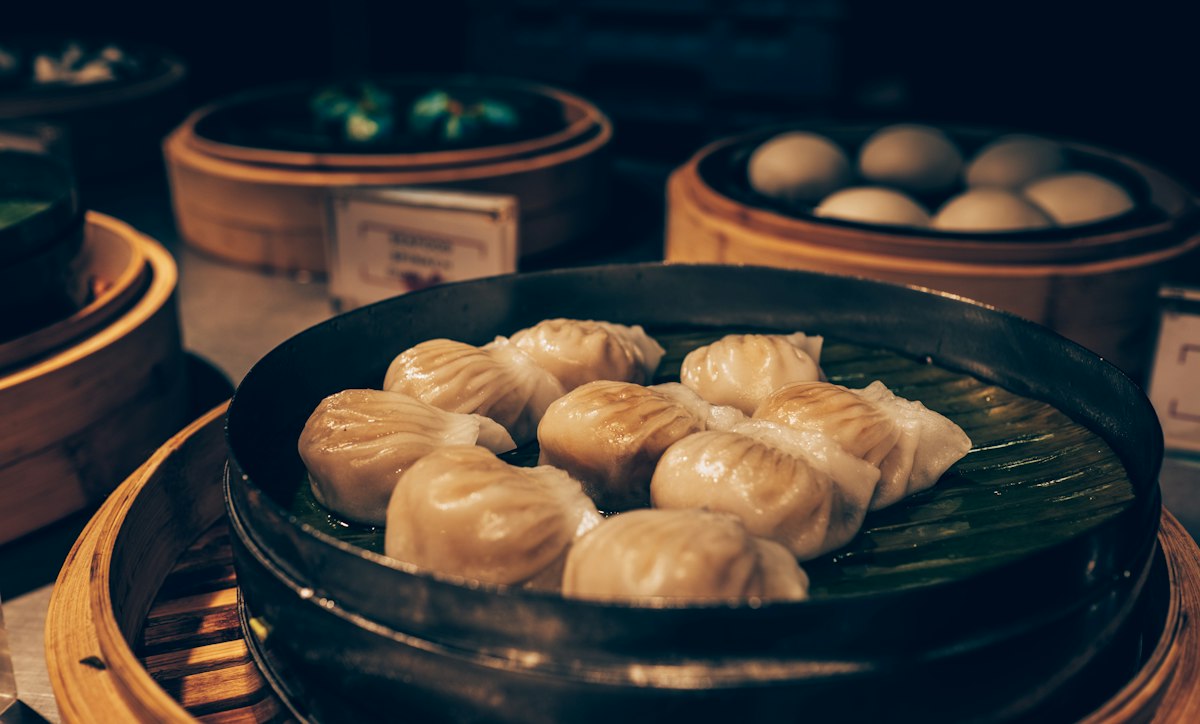
Signature dishes: Dim sum, roast goose, white cut chicken, steamed fish
Best for: Conservative eaters, seafood lovers
Where to eat: Guangzhou, Shenzhen, Hong Kong, Chinatowns worldwide
2. Sichuan — The Famous "Ma La" (Numbing & Spicy)
Flavor profile: Sichuan peppercorns create a tingling, numbing sensation. Chili oil everywhere.
Signature dishes: Hot pot, mapo tofu, kung pao chicken, dan dan noodles
Best for: Spice lovers, adventurous eaters
Where to eat: Chengdu, Chongqing (warning: Chongqing is even spicier)
3. Shandong — Salty & Crispy
Flavor profile: Salty, crispy, seafood-heavy. The original northern cuisine.
Signature dishes: Sweet and sour carp, braised sea cucumber, Dezhou chicken
Best for: Seafood fans, history buffs (oldest major cuisine)
Where to eat: Qingdao, Jinan, coastal Shandong
4. Jiangsu/Huaiyang — Sweet & Delicate
Flavor profile: Sweet, subtle, beautifully presented. The "cuisine of emperors."
Signature dishes: Sweet and sour mandarin fish, braised pork belly, lion's head meatballs
Best for: People who find Sichuan too spicy, food photography
Where to eat: Suzhou, Yangzhou, Nanjing, Shanghai
5. Fujian — Seafood & Soup
Flavor profile: Light broths, seafood, slightly sweet and sour
Signature dishes: Buddha jumps over the wall (luxury soup), oyster omelets, fish balls
Best for: Soup lovers, coastal cuisine fans
Where to eat: Xiamen, Fuzhou, coastal Fujian
6. Hunan — Pure Heat (No Numbing)
Flavor profile: Straight chili heat without the numbing peppercorns. Sour and spicy.
Signature dishes: Steamed fish head with chili, Chairman Mao's red-braised pork
Best for: Chile heads who want pure heat
Where to eat: Changsha, Zhangjiajie
7. Beijing — Imperial & Hearty
Flavor profile: Strong flavors, wheat-based (noodles, dumplings), imperial court influences
Signature dishes: Peking duck, zhajiangmian (noodles with bean sauce), Mongolian hot pot
Best for: First-time visitors, comfort food seekers
Where to eat: Beijing obviously, but found nationwide
8. Northwest (Xinjiang/Shaanxi) — Lamb & Noodles
Flavor profile: Halal-influenced, lamb-heavy, hand-pulled noodles, cumin
Signature dishes: Lamb skewers (yang rou chuan), hand-pulled noodles (lamian), pilaf
Best for: Meat lovers, noodle enthusiasts, Muslim travelers
Where to eat: Xi'an, Lanzhou, Xinjiang, Muslim Quarter areas
Must-Try Dishes by City
Beijing
Shanghai
Xi'an
Chengdu (Sichuan)
Guangzhou
How to Order Food in China (Without Speaking Chinese)
Method 1: The Pointing Method (Most Reliable)
Method 2: Picture Menus
Many mid-range restaurants have:
Method 3: Translation Apps
Google Translate: Download offline Chinese pack before your trip. Use camera feature to translate menus in real-time.
Pleco: Best Chinese dictionary app. Can look up characters by drawing them.
Meituan/ Dianping: Food apps with photos of every dish. Screenshot dishes you want and show the waiter.
Method 4: Learn These Key Phrases
| English | Chinese (Pinyin) | When to Use |
|---|---|---|
| This one | Zhege (这个) | Pointing at food |
| One portion | Yi fen (一份) | Ordering quantity |
| Two portions | Liang fen (两份) | Ordering for two |
| Check, please | Maidan (买单) | Asking for bill |
| Delicious | Hao chi (好吃) | Complimenting food |
| Too spicy | Tai la (太辣) | Warning about spice |
| Not spicy | Bu la (不辣) | Requesting mild food |
| I'm vegetarian | Wo chi su (我吃素) | Dietary restriction |
| No meat | Bu yao rou (不要肉) | No meat please |
| Allergic to... | Dui...guo min (对...过敏) | Allergies: "Dui huasheng guo min" = allergic to peanuts |
Chinese Street Food: What to Try & What to Avoid
Safe Street Food (Generally OK)
Riskier Street Food (Be Cautious)
Street Food Safety Rules
Dietary Restrictions & Allergies
Vegetarian/Vegan (吃素 - Chi Su)
The challenge: Chinese vegetarian (素) often includes eggs and sometimes fish sauce. True vegan is hard.
What works:
Phrases to know:
Halal/Muslim (清真 - Qing Zhen)
The challenge: Pork is everywhere in Chinese cooking, including lard in vegetable dishes.
What works:
Allergies
Peanut allergy: Extremely dangerous in China. Peanuts are in everything — sauces, stir-fries, desserts. Carry a card with your allergy written in Chinese.
Gluten intolerance: Soy sauce contains wheat. Difficult but not impossible — rice dishes without sauce are safest.
Shellfish allergy: Avoid Cantonese cuisine and coastal areas. Inland cities (Chengdu, Xi'an) are safer.
Lactose intolerance: Not a problem — dairy is rare in traditional Chinese cooking.
Restaurant Etiquette & Tipping
Do This:
Don't Do This:
Tipping in China
Short answer: Don't.
Tipping is not part of Chinese culture. Good service is expected as standard. In fact, tipping can be awkward or even insulting — it implies you think the worker needs charity.
Exceptions:
Food Safety: Staying Healthy
What Usually Gets Tourists Sick
The 24-Hour Rule
If you're cautious, follow this: For your first few days, only eat:
Once your stomach adjusts (usually 2-3 days), you can be more adventurous.
What to Do If You Get Sick
Traveler's diarrhea: Usually lasts 24-48 hours. Rest, drink bottled water, eat plain rice or congee (rice porridge).
Pharmacies: Look for the green cross. Pharmacists usually can't speak English, but showing symptoms works: act out diarrhea, point to stomach.
Medication:
When to see a doctor: Blood in stool, fever over 38°C, symptoms lasting more than 3 days.
Restaurant Recommendations by Budget
Budget ($2-5 per meal)
Mid-Range ($10-20 per meal)
Splurge ($30-100+ per meal)
Final Tips for Eating in China
Start familiar, then branch out: Your first few meals, eat things you recognize (dumplings, noodles). Once comfortable, get adventurous.
Don't fill up on rice: Rice is filler. Order less rice and more interesting dishes.
Breakfast is different: Chinese breakfast is savory — congee, baozi, youtiao (fried dough). Embrace it.
Trust local recommendations: Your hotel concierge knows better than TripAdvisor. Ask "Ni juede na li hao chi?" (Where do you think is good to eat?)
Embrace the unexpected: You might be served chicken feet, duck tongue, or stinky tofu. Try everything once — it's part of the experience.
Document everything: Take photos of dishes you love. You'll want to remember the names to order them again.
Ready to eat your way through China?
Related Guides
Keep planning with the closest next reads.
About GoChinaKit: Practical China Travel Help for Tourists
GoChinaKit helps foreign visitors prepare for China with practical guides, eSIM, Alipay, visa, transport, itinerary, and travel tool resources.
Read guideChina Train Travel Phrases: 40 Useful Chinese Sentences
Useful Chinese train travel phrases for China in 2026: station, ticket, boarding, seat, delay, transfer, and arrival phrases with pinyin.
Read guideXi'an Travel Guide 2026: Terracotta Warriors, City Wall & Silk Road
Complete Xi'an travel guide for 2026: Terracotta Warriors, Ancient City Wall, Muslim Quarter food, 3-day itinerary, and transport from Beijing.
Read guideGuilin & Yangshuo Travel Guide 2026: Li River, Karst Peaks & Countryside
Complete Guilin travel guide for 2026: Li River cruise, Yangshuo countryside, karst mountains, hotels, and a practical 3-day itinerary.
Read guide